Petrol & Diesel Prices Today (March 27, 2026): Nayara Energy Hikes Fuel Rates Across India
Todays News IndiaPosted by admin on 2026-03-27 07:30:08 |
Share: Facebook | Twitter | Whatsapp | Linkedin Visits: 97
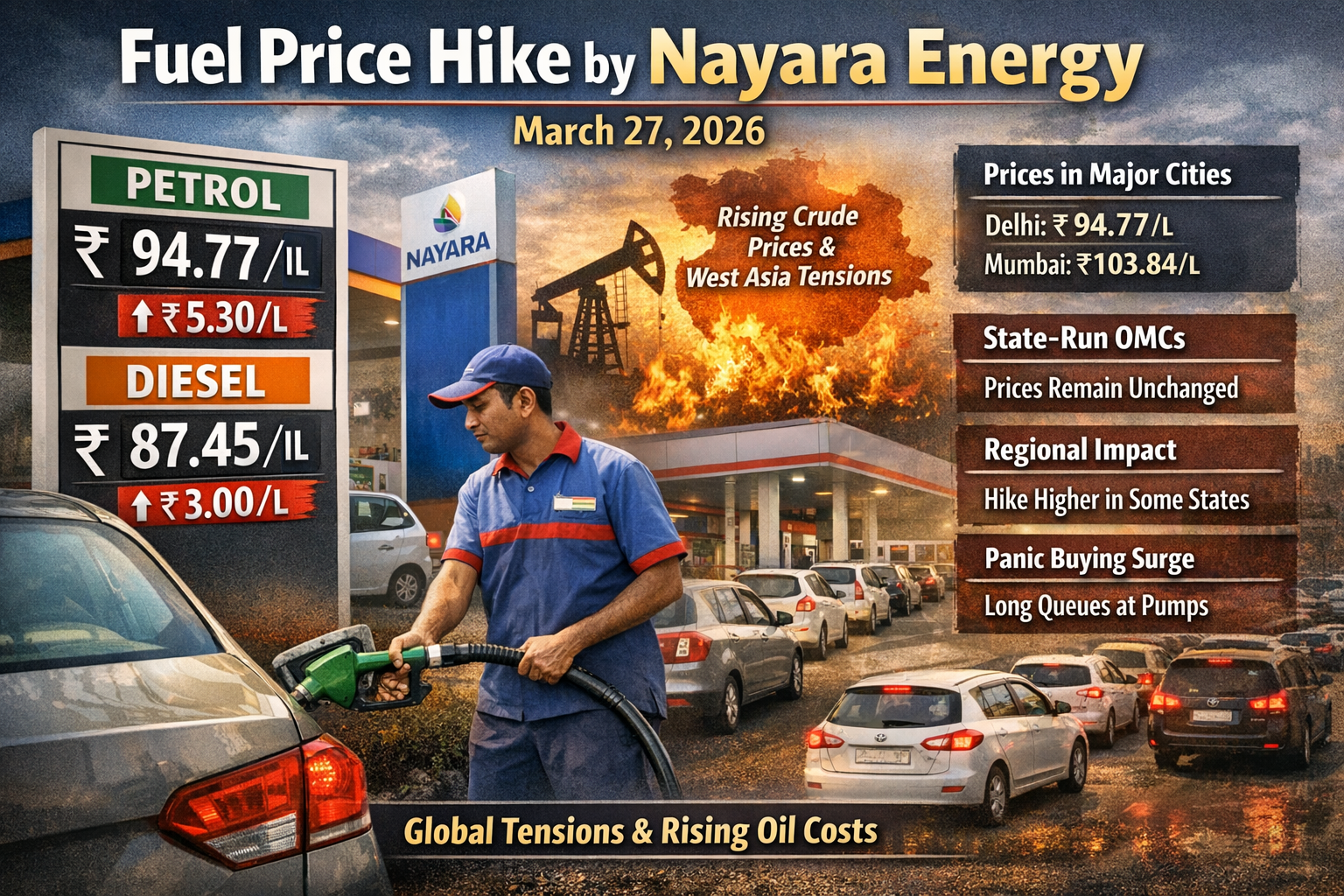
India witnessed a significant development in fuel pricing as private oil retailer Nayara Energy increased petrol and diesel prices across the country. The revised rates came into effect on March 27, 2026, following a sharp rise in global crude oil prices.
Fuel Price Hike by Nayara Energy
Nayara Energy raised petrol prices by approximately ₹5.30 per litre and diesel by around ₹3 per litre. This marks one of the first major fuel price hikes in recent times, breaking a long period of stability in retail fuel rates. (The Economic Times)
The company cited increasing global crude oil prices—driven largely by geopolitical tensions in West Asia—as the primary reason behind the hike. (The Times of India)
Prices Remain Stable in Major Cities
Despite the hike by the private retailer, petrol and diesel prices have remained unchanged in major metro cities such as Delhi, Mumbai, Kolkata, and Chennai. This is because state-run oil marketing companies have continued to hold prices steady to shield consumers from volatility. (The Economic Times)
For instance, petrol in Delhi continues at around ₹94.77 per litre, while Mumbai prices remain above ₹103 per litre. (mint)
Regional Impact and Variations
The impact of the price hike is not uniform across the country. Some states, including parts of Bihar, have witnessed noticeable increases in fuel prices due to differences in local taxes and supply conditions. (The Economic Times)
Additionally, variations in VAT and transportation costs mean that the final price paid by consumers differs from state to state. (mint)
Global Factors Behind the Hike
The surge in fuel prices is closely linked to rising international crude oil rates. Ongoing geopolitical tensions in West Asia have disrupted supply chains and pushed crude prices higher, forcing private retailers like Nayara Energy to pass on the increased costs to consumers. (The Economic Times)
Unlike public sector oil companies, private players do not receive government support to absorb such losses, making price revisions necessary for sustaining operations. (The Economic Times)
Pressure on State-Owned Oil Companies
While private retailers have increased prices, government-run oil companies such as Indian Oil Corporation, Bharat Petroleum, and Hindustan Petroleum continue to maintain stable rates.
However, this has increased financial pressure on these companies, as they are reportedly incurring losses while keeping fuel prices unchanged. (Reuters)
Panic Buying and Market Reaction
The price hike has also triggered panic buying in several regions, with long queues reported at petrol pumps and a surge in fuel demand. Consumers rushed to fill tanks amid fears of further price increases or supply disruptions. (The Times of India)
Conclusion
The hike in petrol and diesel prices by Nayara Energy highlights the growing impact of global oil market volatility on India’s fuel pricing. While public sector companies continue to cushion consumers for now, sustained pressure from rising crude prices could eventually lead to broader price revisions across the country.