A 600-kg NASA Satellite Is Coming Back to Earth: What You Need to Know
Todays News InternationalPosted by vipulnaik on 2026-03-12 03:25:36 |
Share: Facebook | Twitter | Whatsapp | Linkedin Visits: 58
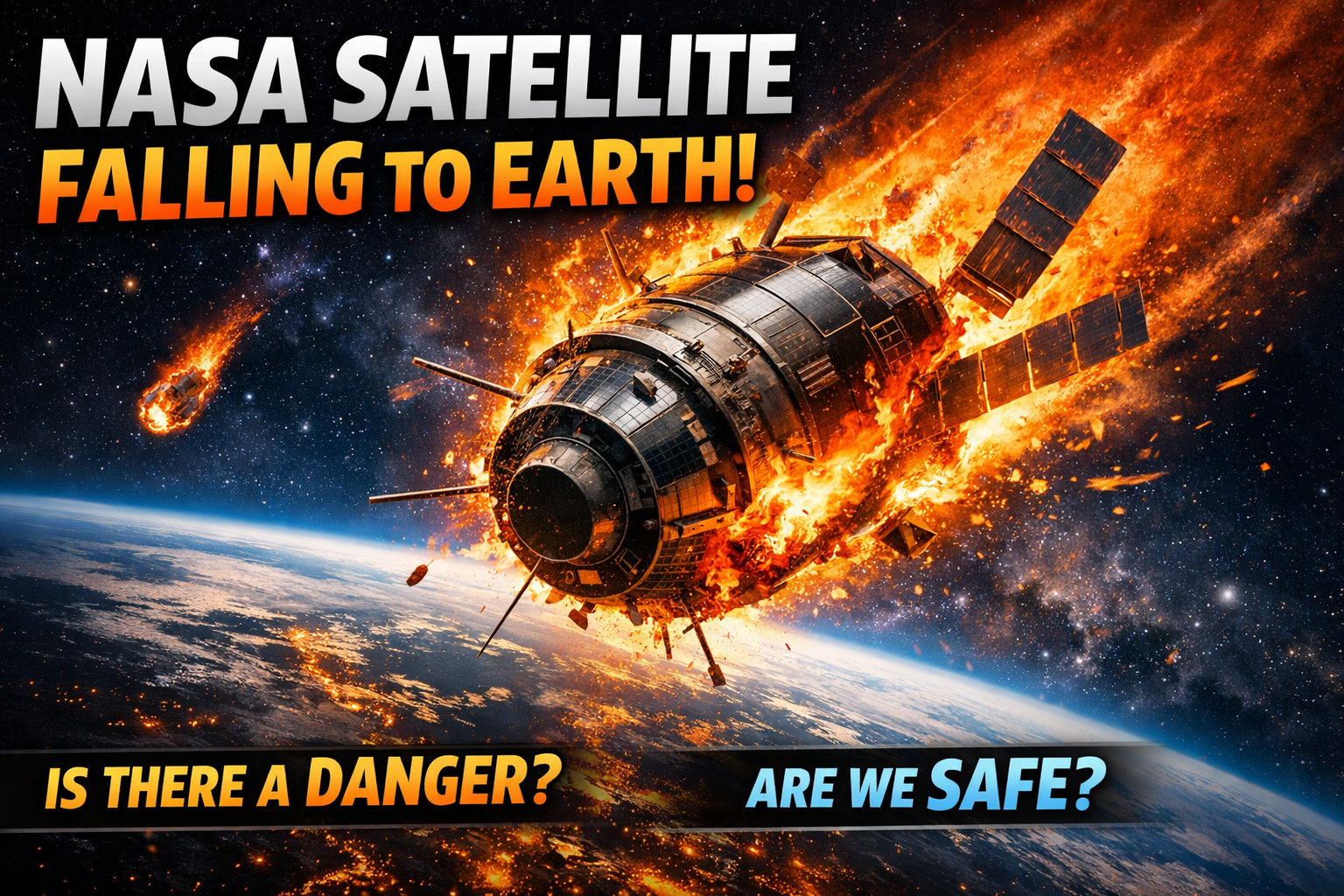
A 600-kg satellite from NASA is expected to fall back to Earth after spending about 14 years in space. The satellite, called Van Allen Probe A, was launched in 2012 by NASA to study the Van Allen radiation belts, which are regions of energetic particles trapped by Earth’s magnetic field. These belts help protect Earth from harmful radiation from the Sun.
Although the mission was planned for two years, the probe worked for almost seven years before being shut down in 2019. Experts say there is very little risk to people, as most of the satellite will burn up when it re-enters the atmosphere due to intense heat and friction.
Here is the article rewritten in my own words based on the NDTV report you shared:
A retired NASA satellite weighing about 600 kilograms is expected to re-enter Earth’s atmosphere after spending nearly 14 years in space. The spacecraft, known as Van Allen Probe A, is gradually falling back toward Earth, but scientists say there is very little danger to people on the ground. Most of the satellite will likely burn up due to intense heat as it passes through the atmosphere. (www.ndtv.com)
The satellite was launched by NASA in August 2012 along with another identical probe. Their mission was to study the Van Allen radiation belts, which are regions of high-energy particles trapped by Earth’s magnetic field. These belts help protect the planet from harmful solar radiation and charged particles coming from the Sun. (www.ndtv.com)
Although the mission was originally designed to last about two years, both probes continued working for nearly seven years. During that time they collected important scientific data about space weather and how it affects satellites, astronauts, and communication systems on Earth. The probes were finally shut down in 2019 after running out of fuel. (www.ndtv.com)
Now, due to natural orbital decay, the satellite’s altitude has been decreasing and it is expected to re-enter the atmosphere. Experts explain that when satellites fall back to Earth, most parts usually disintegrate because of extreme heat and friction. Only a few small pieces might survive the descent, and the chances of them hitting people are extremely low. (www.ndtv.com)