The Ladakh issue and Sonam Wangchuk's role
Todays News IndiaPosted by admin on 2024-01-17 18:30:00 | Last Updated by admin on 2026-10-20 04:15:45
Share: Facebook | Twitter | Whatsapp | Linkedin Visits: 67
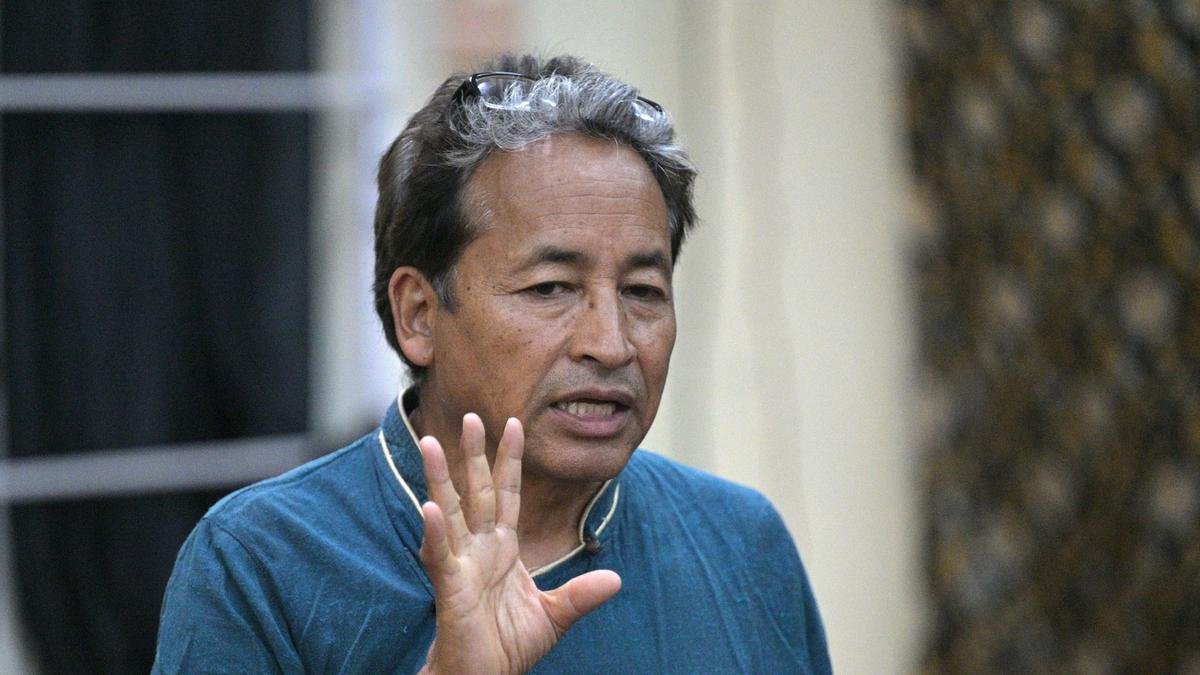
When India gained independence, the question of the merger of Jammu, Kashmir, and Ladakh arose. At that time, the people of Ladakh had clearly expressed their desire that Ladakh should be merged with India by joining East Punjab. However, ignoring their independent opinion and separate identity, Ladakh was forcibly attached to Jammu & Kashmir. Since 1947, this region has remained a major tourist attraction. The majority of the population here belongs to tribal communities with their own distinct culture. Their livelihood depended on limited resources such as traditional agriculture and natural beauty. On 5 August 2019, the Central Government abrogated Article 370 that applied to Jammu & Kashmir, bifurcated the state into two separate Union Territories—Jammu & Kashmir and Ladakh—and declared Ladakh a Union Territory (without a legislature). After this decision, Ladakh was left with only two districts: Leh and Kargil. Becoming a Union Territory reduced Ladakh’s political representation. Several constitutional provisions that protected local laws, traditions, and land rights were removed. With greater direct control of the Central Government over Ladakh, the people feel that Ladakh’s autonomy is now in danger. Since 2013, Sonam Wangchuk has consistently demanded that Ladakh be declared a full-fledged separate state and be included under the Sixth Schedule of the Constitution (which provides special protections to tribal areas). In terms of area and population, Ladakh can easily become a separate state. States like Goa and Himachal Pradesh (Shimla being its former capital) are smaller than Ladakh. Just as Diu-Daman was separated from Goa and made a Union Territory with most powers retained by the Centre, the same formula was applied to Ladakh. However, the issue of Goa and the issue of Jammu & Kashmir are vastly different. Had the Central Government declared Ladakh a separate state along with Jammu & Kashmir at the time of abrogating Article 370, the people there would have celebrated the decision with even greater joy. In Ladakh, Muslims form the majority population. The current Member of Parliament, Mohammad Hanifa, is an Independent. National Conference, BJP, and to some extent BSP have a presence there. Among Buddhists (who constitute around 40% of the population), Jamyang Tsering Namgyal and others are prominent BJP leaders. Together, Muslims and Buddhists make up 86% of the population. This region has historically remained disputed, which has hindered its progress. From 1947 to 1959, Pakistan kept carrying out military incursions and tried to annex the area. From 1959 onwards, China also entered the fray, started claiming the territory and began frequent incursions. Despite all this, the literacy rate in the region is an impressive 82%, which is a big positive. Sonam Wangchuk’s contribution to education is highly commendable. He is a researcher and innovator who has done remarkable work in the fields of agriculture, education, science, engineering, and environment. Himself an engineer, he is famous as an agricultural researcher. After Ladakh became a Union Territory in 2019, the local tribal people fear that outsiders—businessmen, landowners, and others—will come, buy their agricultural land, start industries, and destroy their agriculture, culture, and traditional livelihoods. Sonam Wangchuk is working on a priority basis to remove these fears by developing education and modernising agriculture. His popularity soared after Aamir Khan’s character “Phunsuk Wangdu” in the film *3 Idiots* was inspired by him, which drew greater public attention to his movement. He started a new education system based on “learning by doing” and practical, action-oriented education. Sonam Wangchuk studied the harsh environment of Ladakh in detail and focused on how people can live comfortably even in extreme cold. His biggest contribution in this regard is the invention of passive solar houses made of local mud that maintain an internal temperature of around +15°C even when outside temperature drops to –15°C or lower, enabling people to work comfortably. Along with these modern mud houses, he created artificial glaciers—an absolute boon for agriculture. In summer, when natural water sources dry up, these stored ice reservoirs melt and provide water for farming, bringing about a silent revolution. Because of the huge public support Sonam Wangchuk commands, he intensified the political demand that Ladakh be granted full statehood and brought under the Sixth Schedule of the Constitution. To press this demand, he began a fast-unto-death on 10 September 2025. While the fast was ongoing, sudden violent protests erupted on 24 September 2025. Till date, it is not known who instigated the violence, but four people died and more than 90 were injured. The government arrested Sonam Wangchuk and more than 50 others and held him responsible for the entire episode. Two months have passed since his arrest, yet he has not received justice. His demand is the demand of the people. This demand has existed since 2013; even after becoming a Union Territory in 2019, the core issues of the people remain unresolved. Therefore, instead of suppressing the voice of the people, the government should, within the framework of the Constitution, deliver justice to the people of Ladakh—this is the expectation of every citizen who loves the Constitution. Writer: Jaysing Wagh